
The drive for ever-greater efficiency in municipal and industrial wastewater treatment plants arises in response to increasingly demanding requirements regarding effluent quality, process stability, and the enhanced removal of COD and nutrients.
The introduction of increasingly strict regulations and the need to reuse wastewater for other purposes further push the adoption of increasingly innovative and efficient technologies, including for reactors with moving bed biofilm carriers.
Addressing challenges in wastewater treatment
In many cases, improving the performance of existing wastewater treatment plants is difficult because efficiency increases are hindered by limited process volumes. Expanding the plant therefore becomes a complex challenge due to the specific architectural characteristics of the site in question.
A possible solution is inspired by what is done in performance “tuning” of cars: since increasing engine displacement is often impractical, performance improvements are instead achieved by reprogramming the engine control unit (ECU), ensuring better results without increasing engine size.
Adopting moving bed biofilm processes in existing treatment plants works in a similar way.
Increasing the efficiency of treatment plants with the BioChip30™ carrier
Existing plants often show deficiencies in the biological stages that can be effectively addressed by adopting BioChip30™ biofilm carriers, produced by the Danish company Mutag.
This allows for key advantages:
- Greater treatment efficiency
- Consistent process reliability
- Improved effluent quality
The use of BioChip30™ carriers ensures a protected surface dedicated to biomass growth, significantly superior to traditional carriers, thus offering important operational benefits.
Improving BOD/COD removal and nitrification
Biological wastewater treatment plants play a crucial role in the removal of BOD/COD and, depending on discharge requirements, in the oxidation of ammonia via nitrification and subsequent denitrification.
The BioChip30™ carrier ensures that nitrifying microorganisms have access to the oxygen and nutrients essential for their growth. The amount of microorganisms that make up the biofilm depends on the available surface area for growth.
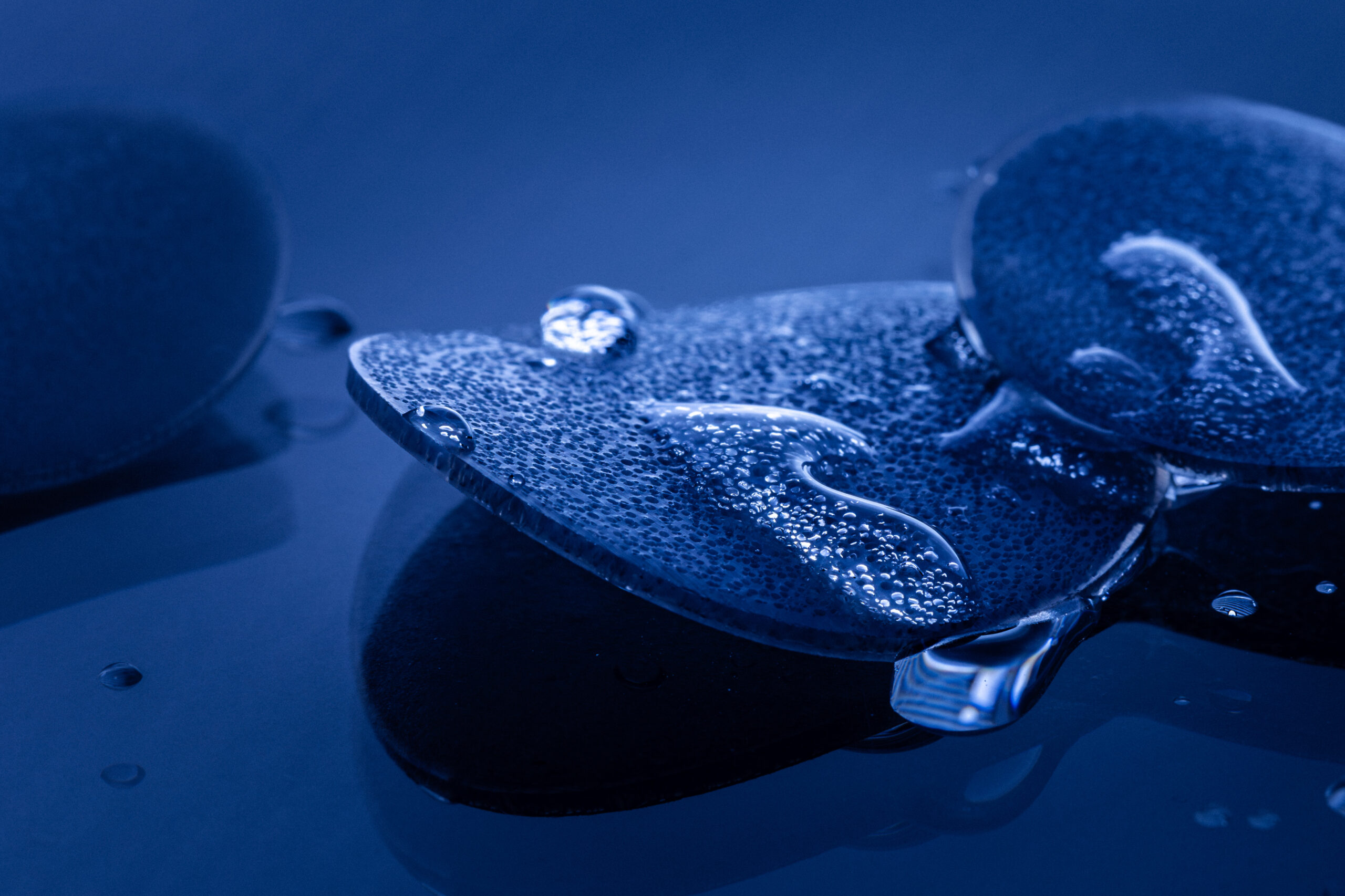
BioChip30™, with its fine-pored structure and protected active surface up to 5,500 m²/m³, offers ideal conditions to maximize biofilm reproduction. The carrier has a diameter of up to 30 mm and a thickness of approximately 1.1 mm, with closely spaced open pores and channels providing an ideal habitat for biofilm growth, covering the entire surface.
Biofilm formation in MBBR/IFAS systems
In MBBR/IFAS moving bed biological reactors, the shear forces between the BioChip30™ carriers, as they collide while immersed in the wastewater, help remove inactive biomass, promoting the growth of an active, thin biofilm that remains accessible to oxygen and nutrients from both sides.
Low weight and optimal mixing
The BioChip30™ carrier has a low weight relative to its surface area and requires little energy to be mixed. Its special paraboloid shape promotes movement, ensured by the airflow provided by diffusers in the biological tank and the resulting turbulence.
Compared to more traditional carriers on the market, wear is also reduced thanks to the lower kinetic energy required.
Optimal biofilm growth and increased biodegradation
The ultra-thin profile of BioChip30™ ensures efficient diffusion of oxygen and nutrients within the biofilm that colonizes it. This, combined with the extensive surface area, allows for the growth and reproduction of high-efficiency biofilms capable of improving removal rates.
Results
Microscopic analysis of colonized BioChip30™ carriers used in a high-load nitrification stage revealed a stable population of AOB and NOB bacteria, confirming the effectiveness of the carrier.
This has made it possible to reduce the volume of the biological reactor while still allowing for the addition of more carriers in the future, should further performance increases be desired.
Fields of application
The BioChip30™ carrier has proven effective not only in municipal applications, but also in industrial plants treating wastewater from:
- paper processing
- textile industries
- food & beverage (F&B)
- pharmaceutical
- chemical sectors
