
Extruded HDPE carriers
Extruded HDPE Carriers
All the carrier models described below are manufactured by extrusion using high-density polyethylene (HDPE). They consist of a cylindrical shape of variable height, within which a series of cells are formed, allowing biofilm to grow and develop.
The protected surface area—meaning the surface available for biofilm growth, expressed in m²/m³—is the key parameter distinguishing different biomedia models. It depends on the size, wall thickness, and cell distribution pattern of the extruded element. This value represents the carrier area that is shielded from collisions and therefore remains available to host biofilm during the biological treatment process.
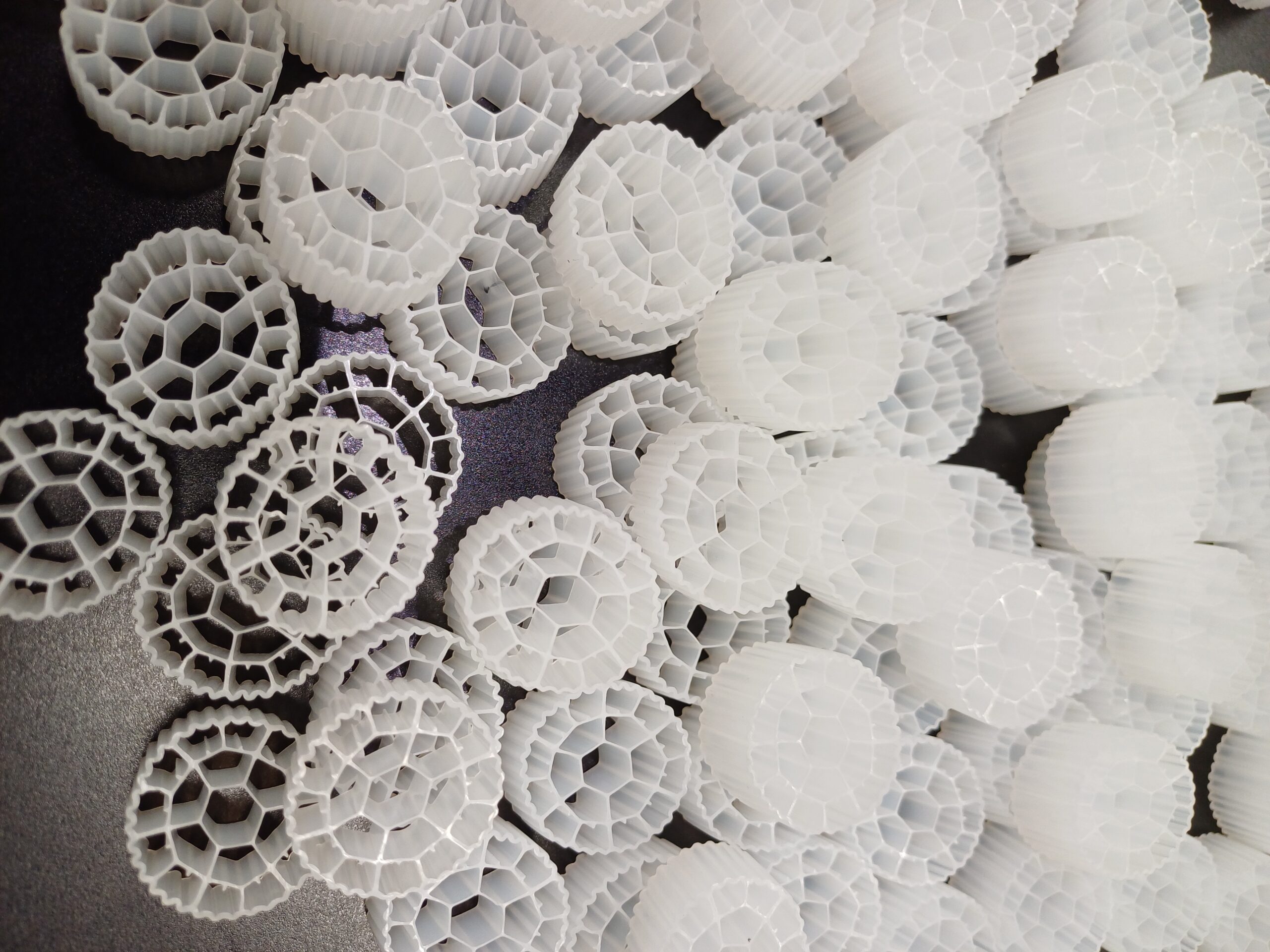
WS600 Model
The WS600 carrier is used as a support element in biological wastewater treatment plants, both municipal and industrial, and is suitable for use in both MBBR and IFAS processes. It is particularly recommended for industrial effluents with high substrate biodegradability, where rapid attached biomass growth occurs.
Key features:
- Commercial name: WS600
- Weight: 105 kg/m³
- Protected surface area: 500 m²/m³
- Height: 12 mm (±0.5 mm)
- Outer diameter: 25 mm (±0.5 mm)
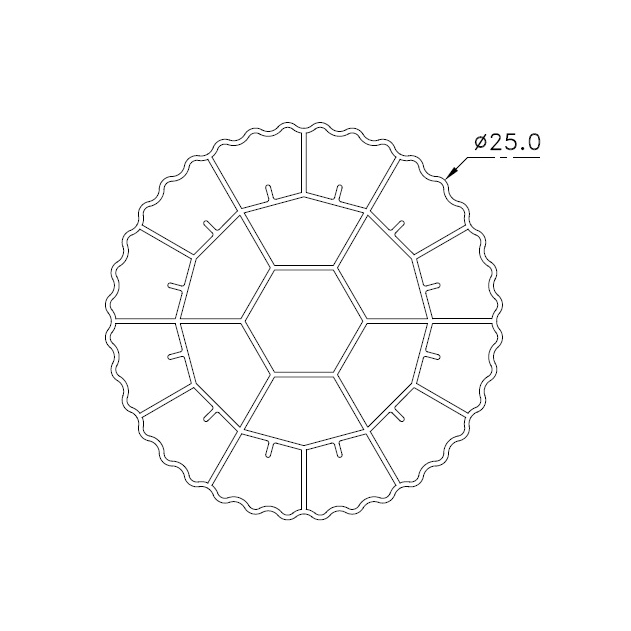
WS800 Model
The WS800 carrier is used as a support element in biological wastewater treatment plants, both municipal and industrial, and can be applied in both MBBR and IFAS processes.
Key features:
- Commercial name: WS800
- Weight: 130 kg/m³
- Protected surface area: 650 m²/m³
- Height: 8 mm (±0.5 mm)
- Outer diameter: 25 mm (±0.5 mm)
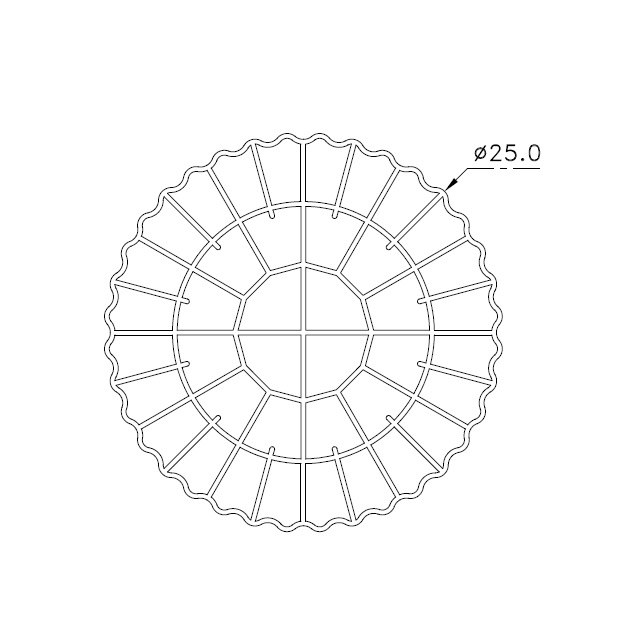
WS900 Model
The WS900 carrier is used as a support element in biological wastewater treatment plants, both municipal and industrial, and can be applied in both MBBR and IFAS processes.
Key features:
- Commercial name: WS900
- Weight: 150 kg/m³
- Protected surface area: 790 m²/m³
- Height: 5 mm (±0.5 mm)
- Outer diameter: 25 mm (±0.5 mm)

Waterspin s.r.l.
Registered office: via Parini 96, 20064 Gorgonzola (MI), Italy
Tel. +39 02.9511419
Fax. +39 02.9511568
info@waterspin.net
www.waterspin.net
P. IVA: 04230040166
COMPANY
- Home
- Who we are
- Our partners
- Applications
- Company Policy
- Contacts
HELP
- Privacy policy
- Cookies policy